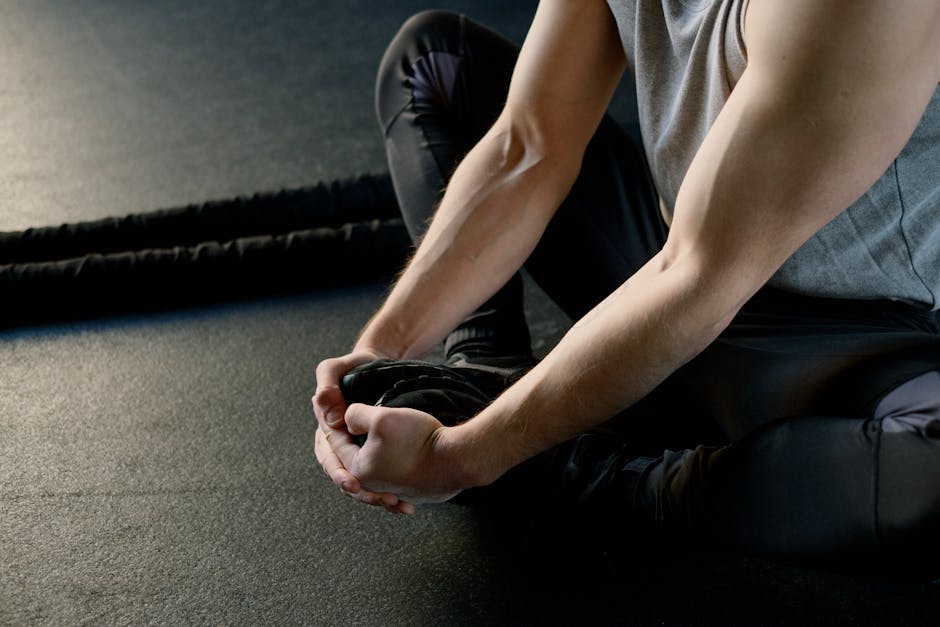
Searched for structural integration for hip pain in Boston? While Rolfing® is a trademark of The Rolf Institute, Joel Gheiler practices the original Rolf Method of Structural Integration — the lineage Dr. Ida Rolf taught her senior students — including Emmett Hutchins, who later founded the Guild for Structural Integration where Joel trained directly under him — before her work was formalized as Rolfing®. Here’s how it addresses hip pain and restriction:
The Hip Problem Nobody Talks About
Most people searching for hip pain relief in Boston after trying Rolfing® already know something is wrong. The hip catches. It aches after sitting. There is a persistent tightness that stretching never quite resolves. And yet imaging often comes back normal. The joint itself may be fine. The problem lives in the tissue surrounding it.
This is where the Rolf Method of Structural Integration offers something fundamentally different from conventional approaches — and distinct from DIRI's modern Rolfing® system as well. Rather than treating the hip as an isolated joint, the work addresses the entire fascial network that governs how the hip moves — and why it stops moving well.
Why Your Hips Are Tight
Modern life is hard on hips. Hours spent sitting at desks, in cars, on couches — the hip flexors shorten, the deep rotators stiffen, and the fascial layers that should glide freely against one another begin to adhere. Over time, these adhesions become the architecture of restriction. The body adapts around them, compensating in the low back, the knees, the feet.
What most people experience as "tight hips" is not a muscular problem. It is a fascial one. The connective tissue has organized itself around a pattern of limited movement, and no amount of stretching will reorganize that pattern. Stretching addresses muscle length. It does not address the fascial web that holds the pattern in place.
The Pelvis as Foundation
Ida Rolf's insight was structural, not symptomatic. She saw that hip restriction was rarely a local problem. The pelvis sits at the intersection of the upper and lower body, and its position determines the alignment of the spine above and the legs below. When fascial adhesions lock the pelvis into a rotated, tilted, or compressed position, the consequences radiate outward.
Low back pain that never fully resolves often traces back to pelvic restriction. Knee issues that persist despite treatment frequently originate in how the hip transmits force downward. This is why Rolfing® practitioners — and those of us trained in the original Rolf Method — do not simply work on the hip when a client presents with hip pain. We work with the relationships between structures.
As I discuss in my article on the Line and why it matters in Rolfing® and myofascial release, the body functions as an integrated whole. The hip cannot be understood in isolation any more than a single note can represent a chord.
How the Rolf Method Addresses Hip Pain
In a Rolf Method session focused on hip mobility, the work typically involves several layers. The superficial fascia must be addressed first — the tissue closest to the surface that wraps the outer hip and thigh. When this layer is restricted, it compresses everything beneath it.
Then the deeper structures come into play: the iliotibial band, the hip flexor complex (including the psoas, which connects the lumbar spine to the inner thigh), the deep lateral rotators, and the fascial layers that line the pelvic bowl itself. Each of these layers has its own pattern of restriction, and each must be addressed in sequence.
This is not random deep tissue work. It is precise, sequential, structural work — organized around the principle that Structural Integration produces lasting change only when the fascial system is addressed as a whole. The ten-session series was designed by Dr. Ida Rolf specifically to address the body in this systematic way, and sessions four and five of the series focus directly on the pelvis and its relationship to the legs and low back.
The Relationship Between Hips, Low Back, and Legs
One of the most common patterns I see in my Boston practice is what I call the "desk pattern" — shortened hip flexors pulling the pelvis into an anterior tilt, compressed lumbar fascia, and externally rotated legs. This pattern does not produce hip pain immediately. It produces it gradually, over months and years, as the fascial system stiffens around the compensation.
When this pattern is present, working on the hip alone provides only temporary relief. The restriction returns because the forces creating it — the shortened psoas, the compressed lumbar fascia, the rotated femurs — remain unchanged. The Rolf Method addresses all of these simultaneously, not because we are trying to do more, but because the body demands it.
What Clients Experience
Clients who come to me for hip pain in Boston typically report a significant shift within the first few sessions. Not because anything dramatic has been done to the hip joint, but because the fascial environment around the joint has changed. The tissue that was compressed begins to lengthen. The layers that were adhered begin to differentiate. The hip finds space it did not have before.
This is not a cure. It is reorganization. The body's own intelligence — its capacity to self-correct when given the structural freedom to do so — does much of the work. The Rolf Method simply creates the conditions for that correction to happen.
Beyond Symptom Relief
If you are searching for a Rolfing® alternative for hip pain in Boston, what you are really searching for is a body that moves without restriction. A hip that flexes, extends, and rotates without catching or aching. A pelvis that supports your spine rather than distorting it.
The Rolf Method offers this not through repetitive treatment of symptoms, but through a systematic reorganization of the fascial system that governs how your body stands, moves, and relates to gravity. When the structure changes, the symptoms resolve — not temporarily, but durably.
That was Ida Rolf's insight. It remains the foundation of the work I do in Boston today.