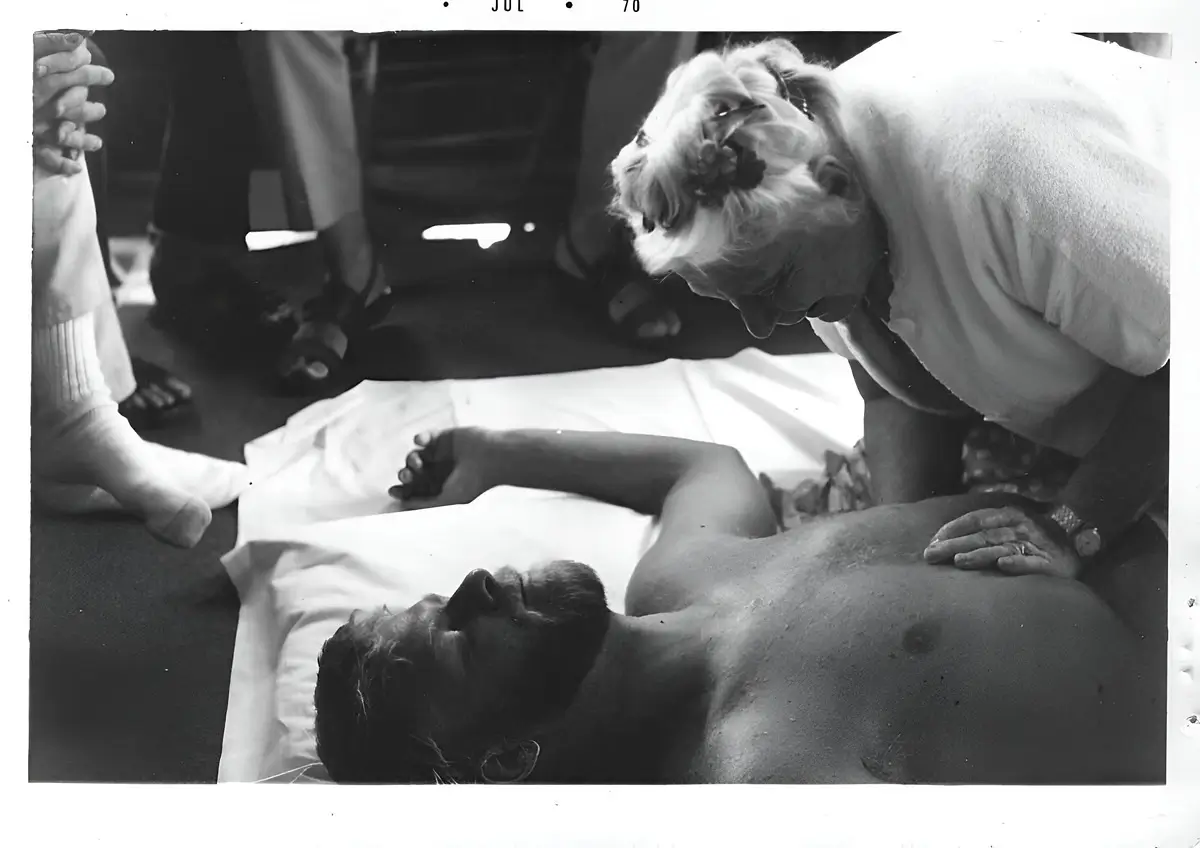
One of the questions I hear most often from clients and prospective clients in Boston is: "Where can I learn more about this work?" It is a fair question. The Rolf Method of Structural Integration is a rich field with decades of history, research, and evolving understanding. Below is a curated collection of resources that I recommend to anyone interested in going deeper — whether you are considering your first session, are already in the middle of the ten-session series, or are simply curious about fascia, structure, and the body's relationship to gravity.
Books by Dr. Ida Rolf
If you want to understand the Rolf Method at its source, start with Dr. Rolf herself. Her writing is dense, precise, and decades ahead of its time.
"Rolfing®: Reestablishing the Natural Alignment and Structural Integration of the Human Body for Vitality and Well-Being" — This is Dr. Rolf's definitive work. It lays out her complete theory of structural organization, the role of fascia, and the relationship between structure and gravity. It is not light reading, but it is the foundation on which everything else is built. If you read one book on this subject, make it this one.
"Ida Rolf Talks About Rolfing® and Physical Reality" — A more accessible collection of Dr. Rolf's lectures and conversations, edited by Rosemary Feitis. This book captures the directness and clarity of Dr. Rolf's thinking in a more conversational format. It is an excellent companion to her primary text and gives a vivid sense of how she thought about the body.
Books on Fascia and Bodywork
The science of fascia has advanced enormously since Dr. Rolf's time, and there are several important books that expand on her foundational insights.
"Anatomy Trains" by Thomas Myers — Myers, himself trained in Structural Integration, maps the fascial continuities that run through the body — the "myofascial meridians" that connect distant parts of the body through continuous sheets of connective tissue. This book makes visible what Dr. Rolf understood intuitively: that the body is a unified fascial web, not a collection of separate parts. It is essential reading for understanding how a restriction in the foot can affect the neck, or how pelvic alignment shapes the entire structure.
"Fascial Release for Structural Balance" by Thomas Myers and James Earls — A more practical companion to Anatomy Trains, this book illustrates how fascial relationships can be assessed and addressed. While it is written primarily for practitioners, it is accessible enough for anyone with a serious interest in understanding how structural work operates.
"The Endless Web: Fascial Anatomy and Physical Reality" by R. Louis Schultz and Rosemary Feitis — Written by two practitioners deeply connected to Dr. Rolf's original work, this book bridges the gap between fascial anatomy and the experience of structural change. It remains one of the clearest explanations of why fascial work produces the results it does.
Video: Foam Rolling for Self-Care
While nothing replaces the precision of hands-on Structural Integration, there are things you can do at home to support the work between sessions. I have put together a foam rolling video that demonstrates techniques for maintaining fascial health and mobility. These are not a substitute for the Rolf Method, but they can be a useful complement to it.
Watch: Foam Rolling Techniques with Joel Gheiler — A guided walkthrough of foam rolling techniques that I recommend to my clients for self-care between sessions. The video covers major fascial lines and demonstrates how to use the foam roller effectively without creating new problems.
The Guild for Structural Integration
The Guild for Structural Integration is the organization through which I was trained and certified. The Guild was founded by practitioners who studied directly under Dr. Ida Rolf and exists specifically to preserve her original approach without modification or dilution.
If you are interested in the distinction between the Guild and other Structural Integration organizations — including why this distinction matters for the quality of the work — I have written about it in detail in my article on Structural Integration vs Rolfing®.
The Guild's website is also a valuable resource for finding certified practitioners in other cities, learning about training programs, and understanding the lineage of the work.
Articles on This Site
I have written extensively about the Rolf Method, its applications, and its philosophical foundations. These articles are designed to help you understand what the work is, how it operates, and what it can address. Here is a guide to what is available:
Understanding the Method:
Structural Integration vs Rolfing® — The history and distinction between the original Rolf Method and the trademarked Rolfing® system. Essential reading for understanding what you are actually receiving when you come to Boston Rolf.
The Ten-Session Recipe — How Dr. Ida Rolf's progressive series works and why it produces lasting structural change.
Why the Line Matters — Dr. Rolf's concept of the Line and its role in organizing the body in gravity.
The Fascial Web — An exploration of fascia as the organizing fabric of the body and the primary medium of structural work.
Why the Rolf Method Works — The science and principles behind lasting structural change.
Conditions and Applications:
Rolf Method for Neck Pain (a Rolfing® alternative) — How the Rolf Method addresses forward-head posture, jaw tension, and chronic neck stiffness.
Rolf Method for Back Pain (a Rolfing® alternative) — Structural approaches to chronic back pain and spinal compression.
Rolf Method for Hip Pain (a Rolfing® alternative) — Fascial patterns in the pelvis and hip and how structural work addresses them.
Rolf Method for Shoulder Pain (a Rolfing® alternative) — The relationship between shoulder tension and whole-body fascial patterns.
Rolf Method for Foot Pain (a Rolfing® alternative) — How the foundation of the body affects everything above it.
Rolf Method for Stress Relief (a Rolfing® alternative) — The structural dimension of chronic stress and nervous system regulation.
Rolf Method for Sciatica (a Rolfing® alternative) — Addressing sciatic nerve compression through fascial reorganization.
Rolf Method for Posture (a Rolfing® alternative) — Why posture is a structural question, not a behavioral one.
Rolf Method for Athletes (a Rolfing® alternative) — How structural work enhances performance and prevents injury.
Deeper Explorations:
Trauma and Structural Integration — How the body holds trauma structurally and what the Rolf Method can offer as part of recovery.
Somatic Therapy and Structural Integration — The relationship between somatic approaches and fascial work.