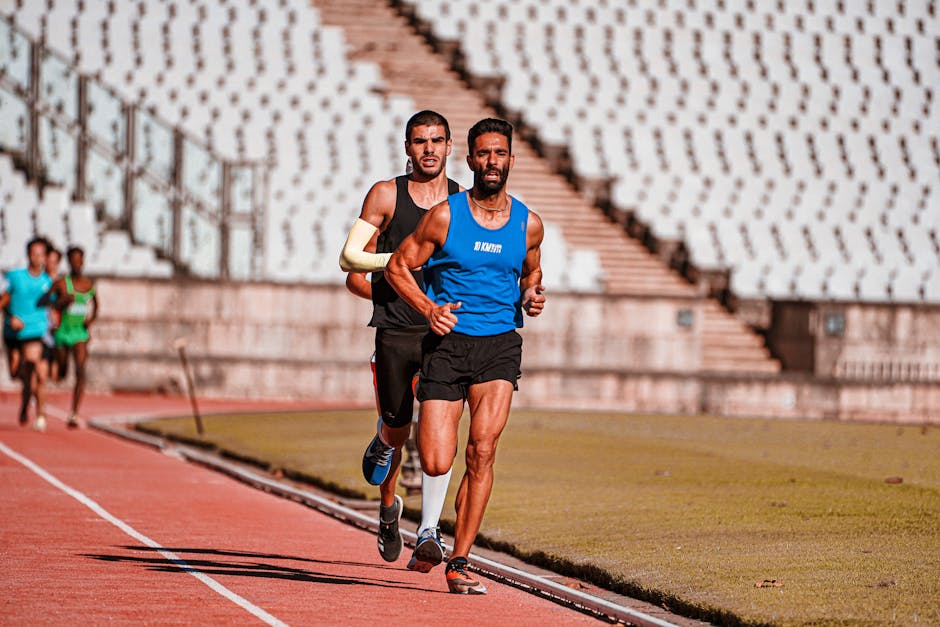
Searched for structural integration for athletes in Boston? While Rolfing® is a trademark of The Rolf Institute, Joel Gheiler practices the original Rolf Method of Structural Integration — the lineage Dr. Ida Rolf taught her senior students — including Emmett Hutchins, who later founded the Guild for Structural Integration where Joel trained directly under him — before her work was formalized as Rolfing®. Here’s how it addresses athletic performance and recovery:
The Structural Ceiling on Athletic Performance
Every athlete eventually hits a wall. Not a wall of effort or dedication — most serious athletes have those in abundance — but a structural wall. A limitation built into the body itself, written in the fascial web, that no amount of training, stretching, or sport-specific drilling can overcome.
I see this regularly in my practice in Boston. Runners who cannot seem to lengthen their stride without pain. CrossFit athletes whose overhead mobility has plateaued despite years of mobility work. Many of these athletes have already tried Rolfing®, sports massage, or PT and arrived wanting work closer to Ida Rolf's original method — the systematic Ten-Series that preceded and is distinct from DIRI's modern Rolfing® system. Martial artists whose hip rotation is mysteriously restricted on one side. Yoga practitioners who have been working on the same pose for years without progress.
These are not failures of effort. They are fascial restrictions — places where the connective tissue has shortened, thickened, and adhered, limiting the range of motion available to the joints and muscles they surround. And until those restrictions are addressed at the fascial level, no amount of stretching or strengthening will resolve them.
Why Fascia Matters More Than Muscles
Athletes tend to think in terms of muscles. Strengthen this, stretch that. But Dr. Ida Rolf understood something that sports science is only now catching up to: fascia is the organizing fabric of the body. It is the continuous web of connective tissue that wraps every muscle, bone, nerve, and organ — and it determines how efficiently force is transmitted through the body during movement.
A runner with fascial adhesions in the hip flexors is not just tight — they are structurally unable to achieve full hip extension. Every stride is shortened. The body compensates by overworking the lower back, the knees, the ankles. Injuries follow, not from the sport itself, but from the structural pattern forcing the body to move inefficiently.
This is what I mean by the structural ceiling. You can train harder, but if the fascial web is not organized to support efficient movement, you are training a compensated pattern — reinforcing the very restrictions that limit you.
How the Rolf Method Creates More Efficient Movement
The Rolf Method of Structural Integration works with the fascial web systematically. Rather than targeting a single tight area — which is what most sports massage and physical therapy do — the Rolf Method addresses the body as a whole, reorganizing the fascial relationships that determine how you move.
As I discuss in my article on the Line, Dr. Ida Rolf's central insight was that the body functions best when its major segments are vertically aligned in gravity. For athletes, this means that the pelvis, ribcage, and head are stacked in a way that allows gravity to support the structure rather than working against it.
When these segments are properly organized, several things happen that directly affect athletic performance. Range of motion increases — not through forcing flexibility, but through removing the fascial restrictions that were limiting it. Power output improves because force can travel through the body more efficiently. Recovery time shortens because the body is no longer spending energy maintaining compensated patterns.
Specific Benefits by Sport
Runners often come to me with IT band issues, plantar fasciitis, or chronic knee pain. These are rarely problems with the IT band, the foot, or the knee themselves. They are symptoms of a structural pattern — often originating in the pelvis or the hip — that places abnormal stress on those areas. By addressing the fascial pattern, the symptoms resolve because the structural cause has been removed.
CrossFit athletes frequently struggle with overhead mobility and posterior chain restrictions. The Rolf Method opens the fascial lines that run from the pelvis through the thoracolumbar fascia, up through the lats, and into the shoulders. When these lines are free, overhead positions become accessible without compensation.
Martial artists depend on hip mobility, rotational power, and the ability to generate force from the ground up. Fascial restrictions in the pelvis and thorax directly limit rotational capacity. The Rolf Method addresses these restrictions systematically, creating the structural freedom that martial arts demand.
Yoga practitioners sometimes discover that their practice has actually created new fascial patterns — overstretched in some areas, bound in others. The Rolf Method helps reorganize these patterns so that the body's flexibility is balanced and structurally supported, not just loose.
Recovery and Injury Prevention
One of the most overlooked benefits of Structural Integration for athletes is what it does for recovery and injury prevention. When the body is structurally well-organized, it recovers faster from training because it is not spending energy maintaining compensatory patterns. The workload is distributed more evenly across the entire structure rather than concentrated in a few overworked areas.
This is also why many injuries are structural in origin. A knee injury is often the result of years of fascial restriction in the hip or ankle that has gradually shifted load onto the knee joint. Addressing only the knee — with ice, bracing, or even surgery — does not change the structural pattern that created the problem. The Rolf Method does.
Why Top Athletes Use Structural Integration
There is a reason that professional athletes, Olympic competitors, and elite performers across many disciplines have sought out Structural Integration for decades. At the highest levels of sport, the margins between performance and injury are razor thin. Structural efficiency is not a luxury — it is the foundation on which everything else is built.
Dr. Ida Rolf's original insight was that the human body is designed to function in gravity with remarkable efficiency, but that life — including the repetitive demands of sport — gradually pulls us out of that optimal alignment. The Rolf Method, as practiced through the Guild for Structural Integration, is the most direct and systematic way to restore it.
If you are an athlete in Boston — whether you run the Charles River, train at a CrossFit box, practice martial arts, or work through a yoga sequence — and you have hit a structural ceiling that training alone cannot break through, the Rolf Method addresses that limitation at its source. The work is precise, systematic, and the results are lasting because the changes are structural, not temporary.