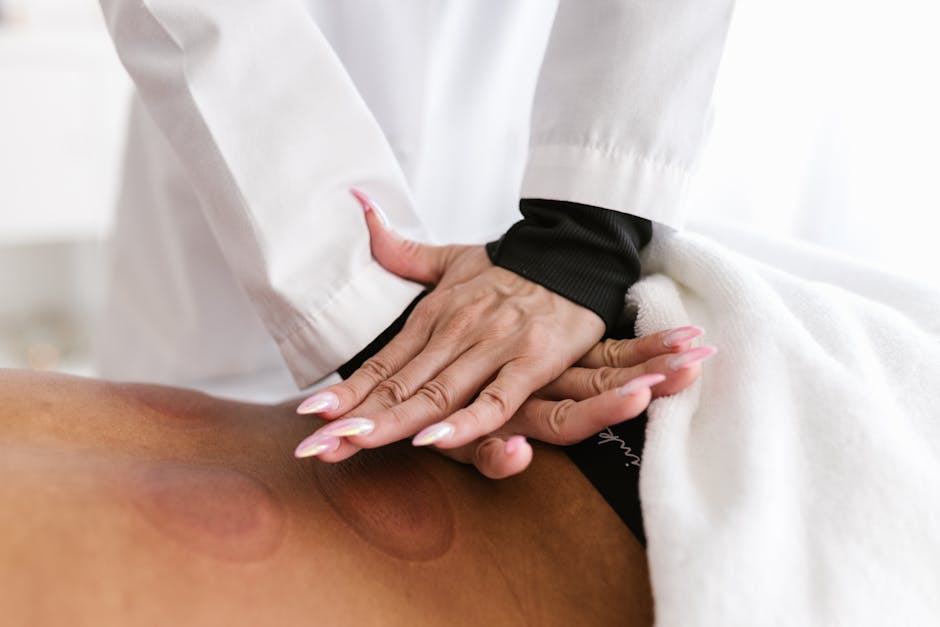
Searched for Rolfing® vs massage in Boston? While Rolfing® is a trademark of The Rolf Institute, Joel Gheiler practices the original Rolf Method of Structural Integration — the lineage Dr. Ida Rolf taught her senior students — including Emmett Hutchins, who later founded the Guild for Structural Integration where Joel trained directly under him — before her work was formalized as Rolfing®. Here’s how it addresses what makes structural work different from massage:
A Question I Hear Every Week
"How is this different from massage?" It is the most common question I receive from prospective clients in Boston, and it deserves a thoughtful answer. Not because massage is inadequate — it is a valuable practice with a long history — but because the Rolf Method of Structural Integration is doing something fundamentally different, and understanding that difference matters when you are choosing how to invest in your body.
The simplest way I can put it: massage addresses how your muscles feel. The Rolf Method addresses how your body is organized. These are different goals, different methods, and different outcomes.
What Massage Does Well
Good massage therapy increases circulation, reduces muscular tension, activates the parasympathetic nervous system, and provides genuine relief from pain and stress. If you have had a hard week and your shoulders are tight, a skilled massage therapist can help you feel significantly better. I have no argument with any of this, and I regularly encourage my clients to include massage in their self-care.
Where massage reaches its limit is in the duration of results. Muscular tension returns because muscles do not operate independently. They are embedded in a fascial web — a continuous sheet of connective tissue that determines the resting length, position, and function of every muscle in the body. When that fascial web is holding a pattern of shortening or rotation, the muscles embedded in it will return to their tense state regardless of how thoroughly they were relaxed during a massage session.
What the Rolf Method Does Differently
The Rolf Method works with the fascial system itself — the connective tissue web that organizes muscles, bones, and organs into a coherent structure. Rather than asking "where does it hurt?" we ask "why is the body organized this way?" The answer usually involves fascial patterns that extend far beyond the area of complaint.
A client comes in with chronic upper back tension. A massage therapist works the upper back. A Rolf practitioner reads the entire structure and may discover that the upper back tension is a compensation for a rotated pelvis, which itself is a response to restricted fascia in the lower leg. The upper back is doing extra work because the foundation below it is not supporting it properly.
As I discuss in my article on Structural Integration vs Rolfing®, this ability to read the body as a structural whole is central to the training I received through the Guild for Structural Integration. It is a fundamentally different skill set from massage, requiring a different education and a different way of seeing the body.
Fascia vs. Muscle: A Critical Distinction
Massage therapy is primarily oriented toward muscle tissue. The strokes, techniques, and intentions of massage are designed to affect muscular tone, circulation, and nervous system activation. Even deep tissue massage, which can feel quite intense, is working with muscles and their immediate fascial coverings.
The Rolf Method works with the fascial web as an interconnected system. The touch is different — slower, more specific, more directional. We are not compressing muscle to release tension. We are engaging the fascia itself, inviting it to lengthen, differentiate, and reorganize. The tissue responds to this engagement by remodeling at a cellular level — a process called mechanotransduction that I explore in my article on why the Rolf Method works.
This is why the changes from Structural Integration tend to be lasting. We are not temporarily changing muscle tone. We are changing the architecture of the fascial system — the structural framework that determines how the entire body is organized.
The Progressive Series vs. Isolated Sessions
Another fundamental difference is the structure of the work. Massage is typically delivered as individual sessions, each one addressing whatever the client needs that day. There is no inherent progression — each session stands on its own.
The Rolf Method follows a progressive series — Dr. Ida Rolf's ten-session recipe — in which each session builds on the previous one. The early sessions open the superficial fascial layers. The middle sessions address the deep core structures. The later sessions integrate everything into a new, more efficient pattern. This progressive approach is essential because structural change requires a systematic strategy, not a series of independent interventions.
When Each Approach Is Appropriate
I believe in choosing the right tool for the job. If you are looking for relaxation, stress relief, and temporary relief from muscular tension, massage is an excellent choice. If you are dealing with chronic pain that keeps returning, postural patterns that are affecting your quality of life, or a body that feels compressed and restricted despite regular massage — that is when the Rolf Method becomes relevant.
Many of my clients in Boston continue to receive massage between Rolf Method sessions, and I encourage it. The two practices complement each other. But they are not interchangeable. Massage maintains. The Rolf Method reorganizes.
If you have been receiving regular massage and your chronic issues keep returning, it may be time to address the structural patterns underlying those symptoms. The Rolf Method, as preserved through the Guild for Structural Integration, offers a level of structural change that massage — no matter how skilled — is simply not designed to provide.