Searched for Rolfing® in Boston? While Rolfing® is a trademark of The Rolf Institute, Joel Gheiler practices the original Rolf Method of Structural Integration — the lineage Dr. Ida Rolf taught her senior students through The Guild for Structural Integration, before her work was formalized as Rolfing®. Here’s the “floating sphere” as a way to think about balanced tension throughout the body:
In a previous blog we explored the idea of the Line — a core concept often discussed in Rolfing® and structural integration work. The Line helps a practitioner approximate relationships between the segments of the body and their alignment with gravity. Whether a practitioner works through the Rolf Method, myofascial release, or somatic therapy, the goal is to help the body organize itself so that movement and posture become easier and more balanced.
Today I want to introduce another concept that can deepen our understanding of the body’s organization: the Floating Sphere.
This idea emerges directly from hands-on work with fascia.
Listening to the Rhythm of Fascia
When practicing the Rolf Method in Boston, much of the work involves listening carefully to the rhythm of the fascial network. Fascia is not static tissue. It has a subtle but continuous motion — an ebb and flow occurring in multiple directions simultaneously. A practitioner working with myofascial release or structural integration learns to feel these movements and follow them moment by moment.
In practice, this means the hands are often placed gently on the body with minimal force at first. The goal is to sense the inherent rhythm within the tissue. Once that movement is perceived, the practitioner can “hook” into the fascia and slowly lengthen a specific layer.
Layering is a fundamental concept often discussed in Rolfing® and myofascial therapy. The body is composed of multiple fascial layers that ideally glide over one another. When those layers become stuck or restricted, movement becomes limited and joints lose their balanced relationship in space.
Moving with the Rhythm — and Beyond It
But simply moving with the body’s rhythm is only part of the story.
A practitioner working through the Rolf Method must also challenge areas where the tissue has lost mobility. In other words, we move with the rhythm where motion exists, and then use that momentum to engage places where motion is absent.
For example, imagine working with the abdomen while a client lies in a sideline position. The goal might be to create more space between the rib cage and pelvis — lengthening the core and restoring a healthier relationship between those structures. When that relationship improves, breathing often deepens, spinal mobility increases, and back discomfort may ease.
The practitioner first listens for the rhythm of the tissue. Then, gradually, they engage the layers that are not moving, guiding the body toward renewed mobility.
The Floating Sphere
This is where the idea of the Floating Sphere becomes useful.
Whenever we balance a joint — or any segment of the body — it helps to imagine that structure existing inside a sphere. Within this sphere, the bones appear to float, suspended by equal tension from all directions.
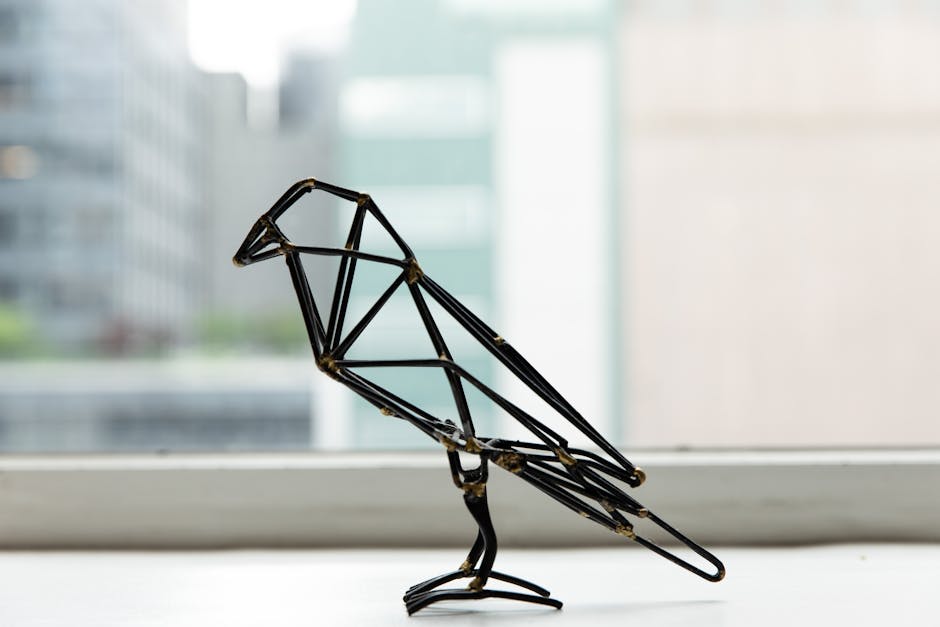
This reflects the principle of tensegrity, a structural concept describing how rigid elements (bones) are suspended within a continuous network of tension (fascia and soft tissue). When the system is balanced, no single area dominates. Instead, forces distribute evenly throughout the structure.
The result is a feeling that the joint is not compressed or rigid, but floating.
An Example: The Spine
Consider the spine. A vertebra does not exist in isolation. It is suspended within the erector spinae, connected to ribs that themselves are suspended within the intercostal muscles, the serratus anterior, and the structures that wrap around toward the sternum. Even the sternum relates to surrounding tissues like the pectorals and the rectus abdominis.
When we visualize these relationships, a sphere naturally emerges.
Each joint, each segment of the body, exists inside its own floating field of balanced tension.
A Multidimensional Perspective
Keeping this three-dimensional sphere in mind allows a practitioner to work with the body in a much more integrated way. Instead of thinking about movement only along a line or within a single plane, we begin to perceive the body multidimensionally — balancing structures from all sides simultaneously.
This perspective is valuable whether someone is exploring Rolfing® in Boston, receiving myofascial release, or engaging in somatic therapy. It reminds us that the body is not a collection of isolated parts but a dynamic system of relationships.
The Floating Sphere is one of the conceptual tools I often keep in mind while practicing the Rolf Method in Boston. By imagining joints and segments suspended within balanced spheres of tension, it becomes easier to guide the body toward a sense of spaciousness, mobility, and structural ease.
Note on terminology: Rolfing® is a registered trademark of The Rolf Institute. The work I practice is the original Rolf Method of Structural Integration, taught through The Guild for Structural Integration — the lineage that preserves Dr. Ida Rolf’s senior-student teachings before her work was formalized.